Water has become one of the key factors in the design of gardens and green spaces, especially in regions with a Mediterranean climate, where summers are long, temperatures are high, and rainfall can be scarce and irregular.
For this reason, choosing plants with low water requirements is becoming increasingly important in private gardens as well as in residential developments, landscaping projects, public spaces, and corporate green areas.
However, designing a garden that requires little watering doesn’t mean limiting yourself to cacti and succulents. There are shrubs, herbs, grasses, and numerous ornamental plants that can provide blooms, fullness, color, and movement while using relatively little water once they are established.
The key is to choose the right species and, above all, to provide them with conditions that meet their needs.
What does it mean for a plant to have low water requirements?
A plant with low water requirements is one that can thrive with less water than other ornamental species, especially once its root system is well established.
This doesn’t mean I can live without water.
During the first few weeks or months after planting, even drought-tolerant species typically require more frequent monitoring of their watering needs. The goal during this stage is to promote the development of a root system that is extensive enough so that the plant can later make better use of the moisture available in the soil.
Once established, the watering frequency can be reduced significantly for many species.
That is precisely why it is important to distinguish between drought tolerance and a complete lack of irrigation.
What factors influence a plant's water consumption?
The type of plant is important, but it is not the only factor that determines how much water a garden will need.
The same plant can behave very differently depending on where it is located.
Sun exposure
A plant that is exposed to full sun for many hours will be subject to different conditions than one located in partial shade.
The higher the solar radiation and temperature, the greater the water loss through evaporation and transpiration can be.
That is why we must always check whether a species is truly adapted to the conditions it will be exposed to.
Soil Type
The soil’s ability to retain water also plays a significant role.
Very sandy soils tend to lose moisture quickly, while certain clay soils can retain it for longer.
This does not mean that soil that retains a lot of water is necessarily better. Some Mediterranean and xerophytic plants need light soil where excess water can drain away easily.
Drainage
Good drainage is especially important for many drought-tolerant species.
Keeping the roots constantly moist can be more harmful than allowing the soil to dry out partially between waterings.
That is why we must avoid assuming that more water leads to better growing conditions.
Every species needs to find its own balance.
Wind
Wind can increase moisture loss from plants and the soil.
This factor is particularly important in open plots and coastal gardens, where plants may be simultaneously exposed to wind, salinity, high temperatures, and intense solar radiation.
Planting Size and Density
The garden’s design also affects total water consumption.
The number of plants, their mature size, and the area of vegetation we want to maintain will determine the overall water requirements.
An efficient design must take these factors into account from the very beginning.
Low-water-use plants for a Mediterranean climate
The Mediterranean climate offers numerous opportunities to create highly ornamental gardens with moderate water requirements.
We can combine species from different groups to achieve structure, flowering, and diversity.
Xerophytes, cacti, crassulaceans, and succulents
Xerophytic plants have adaptations that allow them to survive in environments where water is scarce.
Some store water in their leaves or stems, while others have reduced leaf surfaces or systems capable of limiting water loss.
We shouldn’t think of them solely as plants for desert gardens. When used correctly, they can become sculptural elements of great landscape value.
Agave attenuata, for example, has large leaves arranged in a rosette and can be used as a focal point in a composition. It has low to moderate moisture requirements and thrives in sandy, light, well-drained soil.
Xerophytes work especially well when combined with aggregates, natural stone, grasses, and other Mediterranean species.
Mediterranean Herbs
Aromatic plants are another great resource for water-efficient projects.
Lavender, sage, santolina, rosemary, mugwort, and other species allow you to combine scents, blooms, textures, and foliage in different shades.
Many are also of significant interest to bees and other pollinating insects.
Artemisia absinthium, for example, is notable for its silvery-green foliage and its ability to thrive in poor, sandy soil. It does not do well with overwatering and prefers full-sun locations.
This type of grayish foliage is particularly interesting when paired with more intense greens, grasses, and plants with purple or blue flowers.
Ornamental grasses
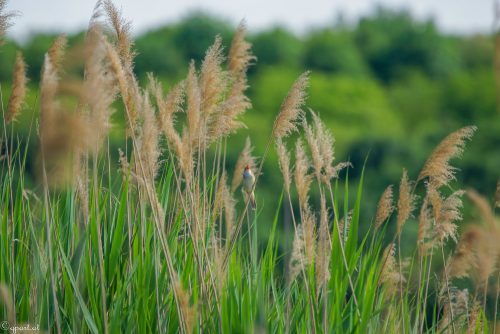
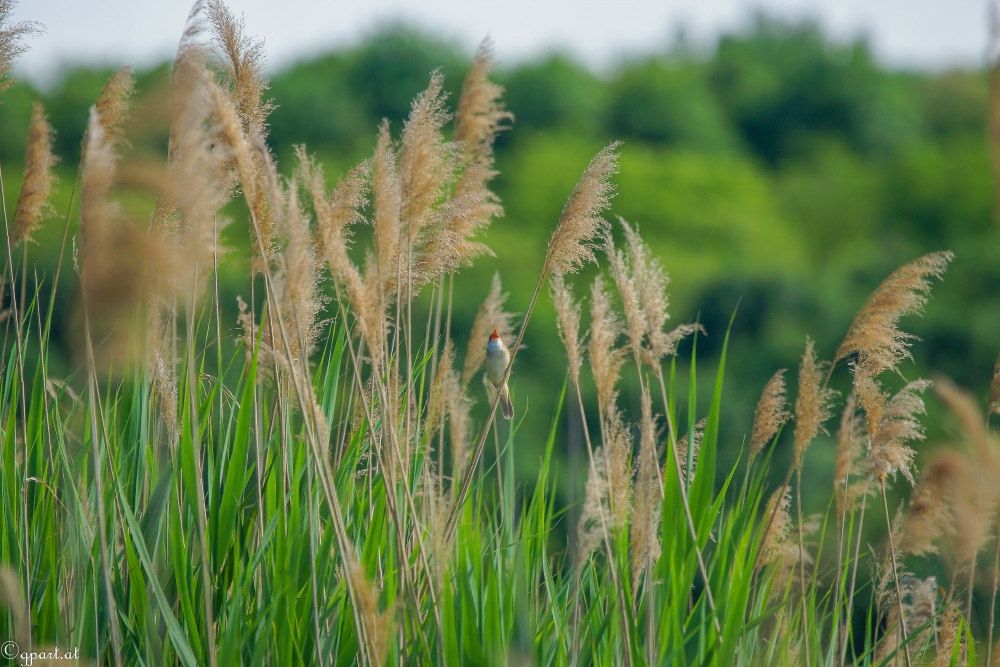
Grasses allow us to introduce an element that is often missing when we design using only shrubs: movement.
Its leaves and flower clusters sway in the wind, lending a sense of lightness to the arrangements.
There are species suitable for Mediterranean-style projects and gardens where the goal is to reduce maintenance.
Nasella tenuissima, also known as Stipa, develops extremely thin leaves and has a characteristic feathery appearance. It adapts to various soil types as long as they do not tend to become waterlogged, and it tolerates high temperatures.
It can be used in repeated groups among shrubs or perennials to create more natural-looking arrangements.
Hardy shrubs
Shrubs play a vital role because they provide volume, structure, and permanence to the garden.
Within this group, we can find species adapted to different levels of humidity.
Westringia fruticosa is particularly well-suited for Mediterranean-style landscapes. It is an evergreen shrub with gray-green foliage that is drought-tolerant once established and thrives in full sun and light, well-drained soil. It also tolerates wind and salty air, making it especially useful in gardens near the sea.
Choosing the right shrubs allows you to create plant masses, small screens, borders, or structural elements without necessarily relying on species with high water requirements.
Perovskia for Low-Maintenance Gardens
Perovskia atriplicifolia is another particularly interesting species when we want to combine low maintenance with ornamental value.
It has grayish foliage accompanied by long, bluish-purple inflorescences and thrives in full sun.
It tolerates various soil types, including alkaline soils, provided there is adequate drainage. Its long flowering period makes it suitable for use in flower beds and for combining with shrubs and grasses.
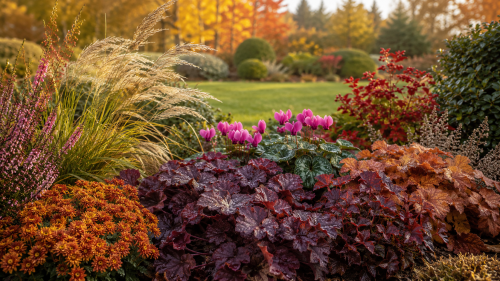
It is precisely this combination of plants with different heights and textures that makes it possible to create water-efficient gardens without ending up with overly uniform arrangements.
Common Mistakes When Designing a Water-Efficient Garden
Selecting hardy species is only one part of the project. Poor planning can significantly increase water consumption.
Water all the plants equally
One of the most common mistakes is to set the entire garden to the same irrigation schedule.
If an area contains species with very different needs, we’ll end up giving too much water to some and not enough to others.
The best strategy is to group plants according to similar water needs and divide the irrigation system into zones.
Choosing a hardy plant and putting it in the wrong spot
A species may be perfectly capable of withstanding drought, yet it may not thrive if it receives too much shade or is planted in waterlogged soil.
Low water requirements should never be analyzed in isolation.
We should also check:
- Sun exposure
- Type of land
- Drainage
- Lowest temperatures
- High Temperatures
- Wind and Salinity
- Adult Dimensions
Overwatering throughout the year
Plants’ needs change with the seasons.
Keeping the same schedule in the fall and winter as you do in the summer can lead to unnecessary energy consumption and even problems caused by excess moisture.
Irrigation should be adjusted according to temperature, rainfall, and the plants’ actual needs.
Confusing a water-efficient garden with a maintenance-free garden
All green spaces require some form of maintenance.
The goal is to reduce unnecessary interventions by selecting plants that are compatible with the environment.
A plant that is properly situated will generally require fewer adjustments, less watering, and less care than a plant forced to grow in unsuitable conditions.
How do I choose the right species from the catalog?
Before choosing a plant for a project, it is a good idea to determine the conditions of the area where it will be installed.
At a minimum, we need to know the sun exposure, the type of soil, the drainage, the temperatures in the area, and the availability of water.
From there, we can explore different groups in the Adriza’s Plants catalog:
Xerophytes, cacti, crassulaceans, succulents, and palms—when we’re looking for species that are particularly well-adapted to dry conditions and want to incorporate architectural forms.
Aromatic plants, to add foliage, fragrance, and blooms suited to the Mediterranean climate.
Grasses, when we need texture, movement, and natural-looking compositions.
Shrubs, to provide volume, structure, mass, and permanent features.
Not all plants in the same category have exactly the same water needs. Therefore, after selecting a group, we should always review the individual fact sheet for each species and check its requirements for moisture, sunlight, soil, and temperature tolerance.
Plants Suitable for More Sustainable Projects
Reducing water use begins long before you set up your irrigation system.
Start by selecting species that can thrive with the available resources.
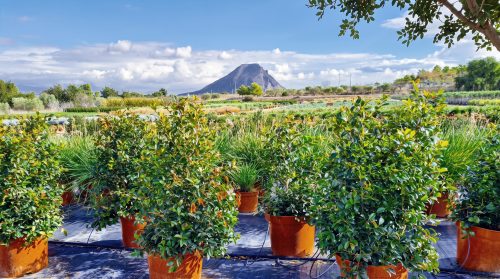
At Adriza’s Plants, we grow ornamental plants for professionals, including xerophytes, low-water-use species, and varieties that are resistant to harsh climates. Our production process also incorporates automated drip irrigation systems and drainage control to adjust water and nutrient inputs to the plants’ needs.
Choosing the right plant species makes it possible to design gardens that use less water, are more resilient, and are better suited to the Mediterranean climate, without sacrificing diversity, blooms, or landscape value.
Browse our catalog and select the plants best suited to the actual conditions of your next project.