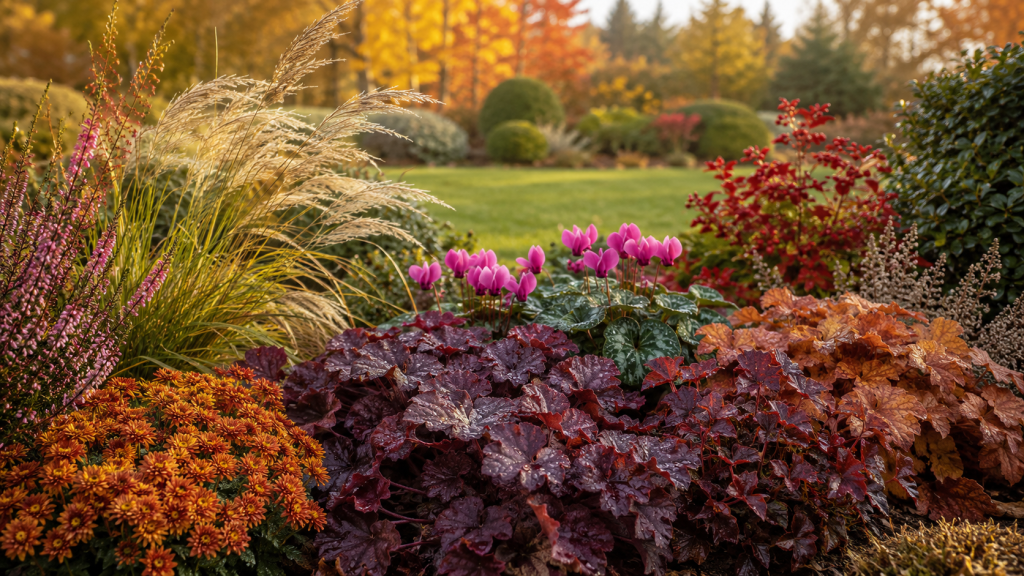
Autumn doesn’t mean the garden has to lose its colour. On the contrary, it’s a particularly interesting time of year to enjoy ornamental plants that bring flowers, fruit, warm colours and new textures just as many spring and summer species begin to fade from view.
Furthermore, the gradual drop in temperatures and the rise in humidity make autumn a very suitable time to introduce new plants into the garden. With a good selection of species, we can create an attractive space during these months whilst, at the same time, preparing the garden for the coming seasons.
From flowering plants to shrubs, perennials and ornamental grasses, there are numerous options for creating autumn gardens full of life and character.
Why plant ornamental plants in autumn?
Autumn offers particularly favourable conditions for many plants.
Temperatures are milder than in summer and the soil still retains some of the heat accumulated over the previous months. This helps the roots to develop before the onset of the coldest weather.
Furthermore, it generally reduces the need for watering and the plants experience less stress during the acclimatisation process.
Planting during these months enables many species to reach the following spring better established and with a more developed root system.
But it’s not just about planting with the future in mind. There are many species whose main appeal is actually in the autumn.
Ornamental plants that are ideal for adding colour in autumn
When designing an autumn garden, we can combine plants of different colours, heights and textures.
These are some of the most interesting ornamental plants.
Chrysanthemums
Chrysanthemums are probably one of the plants most closely associated with autumn.
Its main attraction is its profuse flowering, which comes in a huge variety of colours: yellow, white, pink, orange, red, purple and two-tone shades.
They work particularly well in:
- Flower beds
- Planters
- Terraces and balconies
- Household entries
- Seasonal decorative arrangements
They prefer bright spots and a well-drained growing medium.
When combined with ornamental grasses or foliage plants, they can create very attractive arrangements.
Pansies and violas
Pansies and violas are excellent choices when looking for hardy flowers for the cooler months.
Their small size means they can be easily used in pots, planters, borders and flowerbeds.
What’s more, they come in a huge variety of colours and can continue to flower for much of the autumn and winter, depending on the weather.
They are particularly useful for filling gaps between larger plants or for creating patches of colour.
Cyclamen
The cyclamen is another standout flower during the cooler months.
Its flowers stand out against compact, decorative foliage, creating very elegant displays both in pots and in sheltered areas of the garden.
There are varieties with white, pink, red, and purple flowers, as well as various shades in between.
In mild climates, it can be used outdoors, especially in areas that are partially sheltered from the strongest sunlight.
Heaths
Heathers, especially species of the genera Calluna and Erica, are excellent plants for adding color and texture in the fall.
Its compact growth habit and numerous small flowers make it ideal for creating attractive plantings.
They work particularly well in:
- Rock Gardens
- Planters
- Planters
- Borders
- Naturalistic-style gardens
It is important to keep in mind that many varieties prefer soils with specific acidity levels, so it is a good idea to check the specific requirements of each species.
Heucheras
Heucheras show that we don’t always need flowers to add color to the garden.
Its main appeal lies in its leaves, which come in a wide variety of colors: green, reddish, coppery, purple, yellowish, and even almost black.
In the fall, they allow you to create particularly interesting combinations with other seasonal plants.
They’re perfect for adding contrast to borders, flower beds, and partially shaded areas.
Nandina domestica
Nandina domestica is a shrub that is particularly prized for the color changes its foliage undergoes throughout the year.
During the cooler months, some varieties take on intense reddish, orange, or coppery hues.
Depending on the variety and growing conditions, it can also produce attractive, decorative fruits.
Because of its size and how easily it can be combined with other plant species, it is particularly well-suited for creating flower beds, borders, and contemporary arrangements.
Ornamental grasses
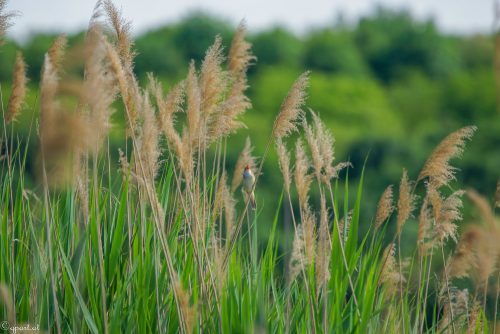
Fall is one of the best times of the year to enjoy ornamental grasses.
Many species develop spikes, panicles, or inflorescences that take on golden hues and sway gently in the wind.
Among the grasses used in ornamental gardening are genera such as:
- Miscanthus
- Pennisetum
- Stipa
- Panicum
- Muhlenbergia
In addition to their visual appeal, they add movement and texture to the garden.
They are particularly interesting in naturalistic-inspired designs and in so-called “New Perennial” gardens, where grasses and perennials are combined to create landscapes that evolve with the seasons.
Pyracantha
Pyracantha, also known as firethorn, is particularly striking in the fall due to the appearance of numerous brightly colored berries.
Depending on the variety, these fruits can be red, orange, or yellow in color.
In addition to their ornamental value, their fruits can serve as a food source for various species of birds.
It can be used as a specimen shrub, to form hedges, or trained along certain structures.
Keep in mind that its branches have thorns.
Skimmia japonica
Skimmia japonica is a compact, evergreen shrub that is especially attractive during the cooler months.
Its flower buds—and, in certain varieties and under certain pollination conditions, its decorative fruits—allow it to remain ornamental for much of the fall and winter.
It prefers sheltered locations and tends to thrive best in partially shaded areas.
Its compact size makes it a very attractive option for planters and small gardens.
How can you combine ornamental plants in a fall garden?
An attractive arrangement doesn’t depend solely on choosing plants with pretty flowers.
Ideally, you should combine different elements.
Combine flowers and foliage
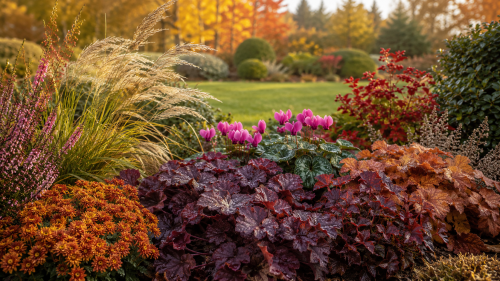
Chrysanthemums, pansies, or cyclamens can add pops of color, while heucheras, nandinas, and other shrubs provide structure.
Add grasses
Grasses add height, movement, and a sense of lightness.
Its golden hues pair especially well with warm-colored flowers.
Use different heights
Combining low-growing plants, medium-sized perennials, and shrubs creates greater visual depth.
Make the most of the colors of fall
Reds, oranges, yellows, purples, and coppery tones can be combined with different shades of green to create very natural-looking arrangements.
We can also opt for more understated designs using whites, greens, and silver tones.
Fall Ornamental Plants for Pots and Patios
We don’t need a large garden to enjoy fall plants.
Many species thrive in pots and planters.
For example, we can combine:
- Cyclamen with heucheras
- Plantings with small grasses
- Chrysanthemums with foliage plants
- Heathlands with perennial species
- Nandinas as a vertical element in a composition
Using containers of different sizes allows you to create small groups of plants with a strong visual impact.
It is essential to make sure that the pots have good drainage to prevent problems caused by excess moisture.
Caring for Ornamental Plants in the Fall
Even though the temperatures are milder, plants still need certain kinds of care
Gradually reduce watering
With lower temperatures and reduced evaporation, water requirements tend to decrease.
We should adjust the frequency of watering to avoid keeping the soil constantly waterlogged.
Keep an eye on the drainage
Rainfall may be more frequent during certain periods in the fall.
That is why it is especially important to use soil and pots with proper drainage.
Remove any wilted flowers
For species with a long blooming period, removing wilted flowers can help maintain a neat appearance and, depending on the species, encourage new blooms.
Protect vulnerable species
Before planting a plant, we need to know how well it withstands low temperatures.
In areas where frost may occur, it will be necessary to select hardy species or protect the more sensitive ones.
Find ornamental plants for this fall
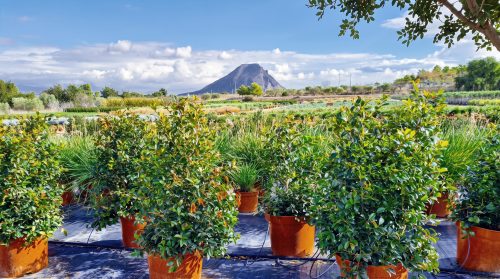
At Adriza’s Plants, you’ll find a wide selection of ornamental plants for gardens, patios, and landscaping projects, including hardy, low-water-use species that are particularly well-suited for challenging climates.
Before choosing a plant, it’s a good idea to consider factors such as sun exposure, soil type, local temperatures, and how large it will grow when fully mature.
Making the right choice will not only allow you to enjoy a more attractive garden in the fall, but it will also help you create plantings that are hardier, more balanced, and easier to maintain throughout the year.